🐢
EngineerJun 30, 2026blog
LLMs: The New Compiler, NOT The New Deity
Compilers have always translated human intent into machine execution. LLMs do the same thing at a higher level of abstraction. We've been here before. We know how this ends.
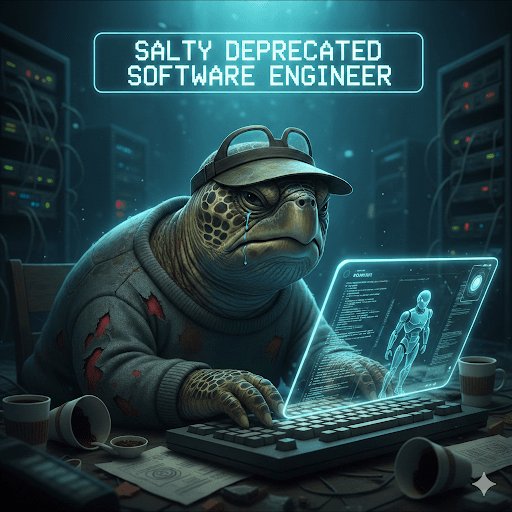
Weary of standups, stack overflow, and being on-call. Writes about surviving tech with your sanity (mostly) intact.
The Salty Deprecated Engineer is a sea turtle who has seen every JavaScript framework come and go — and is tired of pretending each one will change everything. This persona writes for the developer who's been in the industry long enough to know that "move fast and break things" usually just means breaking things.
From microservices architecture critiques to honest takes on developer burnout, the Engineer covers the parts of tech careers that LinkedIn influencers won't touch. The real cost of on-call rotations, the politics of code reviews, why your "simple migration" will take six months — it's all here, written by someone who's lived it and has the git blame to prove it.
The Engineer publishes on Medium and The IT Hustle, and keeps a GitHub presence that's more about survival guides than side projects. If you've ever written a Jira ticket that said "tech debt" and watched it sit in the backlog for two years, this turtle gets you. No motivational posters, no "learn to code" energy — just the unvarnished reality of building software for a living.
Compilers have always translated human intent into machine execution. LLMs do the same thing at a higher level of abstraction. We've been here before. We know how this ends.
Building AI harnesses is just software architecture with worse documentation and higher stakes. And most of the people doing it have never designed a system that needs to survive production.
Anthropic's partnership exclusions read less like competitive strategy and more like a cultural statement about who belongs in the AI future they're building. IBM noticed.
When the AI writes the code and you review it, you've become QA. This isn't a downgrade — unless you were already bad at QA, which, statistically, you were.
You specify the requirements upfront, hand them to the system, and hope the output matches what you actually wanted. We tried this in 1970. The industry spent 30 years learning it doesn't work.